Blog

The Many Faces of Fear: Admitting to the Fear (of Fear)

A number of us in this life happen to be perfectionists – and those of us who are fully recognise that this trait can make us create untold difficulties for ourselves. We’re aware that we’re making our lives extra hard, but most of the time simply can’t stop our brains from questing for perfectionism. And so, when it comes to coping with fear, a perfectionist will put extreme pressure on themselves to deal with whatever that fear is in a textbook manner. This usually results in feelings of extreme dread or delaying tactics as a person psychs themselves up to deal with the issue, while at the same time settling for nothing less than the ‘stiff upper lip’ approach – not allowing themselves to show any sign of weakness as they tackle that fear. All this, rather than being sensible and reasonable – and cutting themselves some slack! The very title of Hugh’s next article, following on from his excellent first post for Places Wild and High (you can find it here), couldn’t describe this situation better: Admitting to the Fear (of Fear). Lots of food for thought here – I can already identify a couple of strategies that I will put into play once normal outdoors life resumes for me. So read, enjoy, and both Hugh and I hope that this article prompts much thought and discussion!

A ‘heads up’: some images of post-surgery, xrays etc. appear below.

Hugh writes: This is not the article I planned and promised to write about the physiology of fear. That one has stalled temporarily due to a busy few weeks and not enough time and headspace for writing. But I did find time to have a personal breakthrough that I thought was worth sharing.

I am a keen road cyclist and last August I had a pretty major off that broke both me and my bike. I am a pretty fast descender and, while I don’t think Tom Pidcock has much to fear from me, there are some local hills that I do actually have faster times on than some of the pros who trained around here during the UCI World Championships held in Glasgow in 2023. To go any faster on some of the descents that I know well I would need a more aerodynamic bike, higher gears and – especially – a complete disregard for the fact that cars might be coming up the road and around blind bends. I am not boasting about my skills, just highlighting the fact that fear of crashing at high speeds on a road bike has not held me back. But until a couple of weeks ago I feared that might have changed.

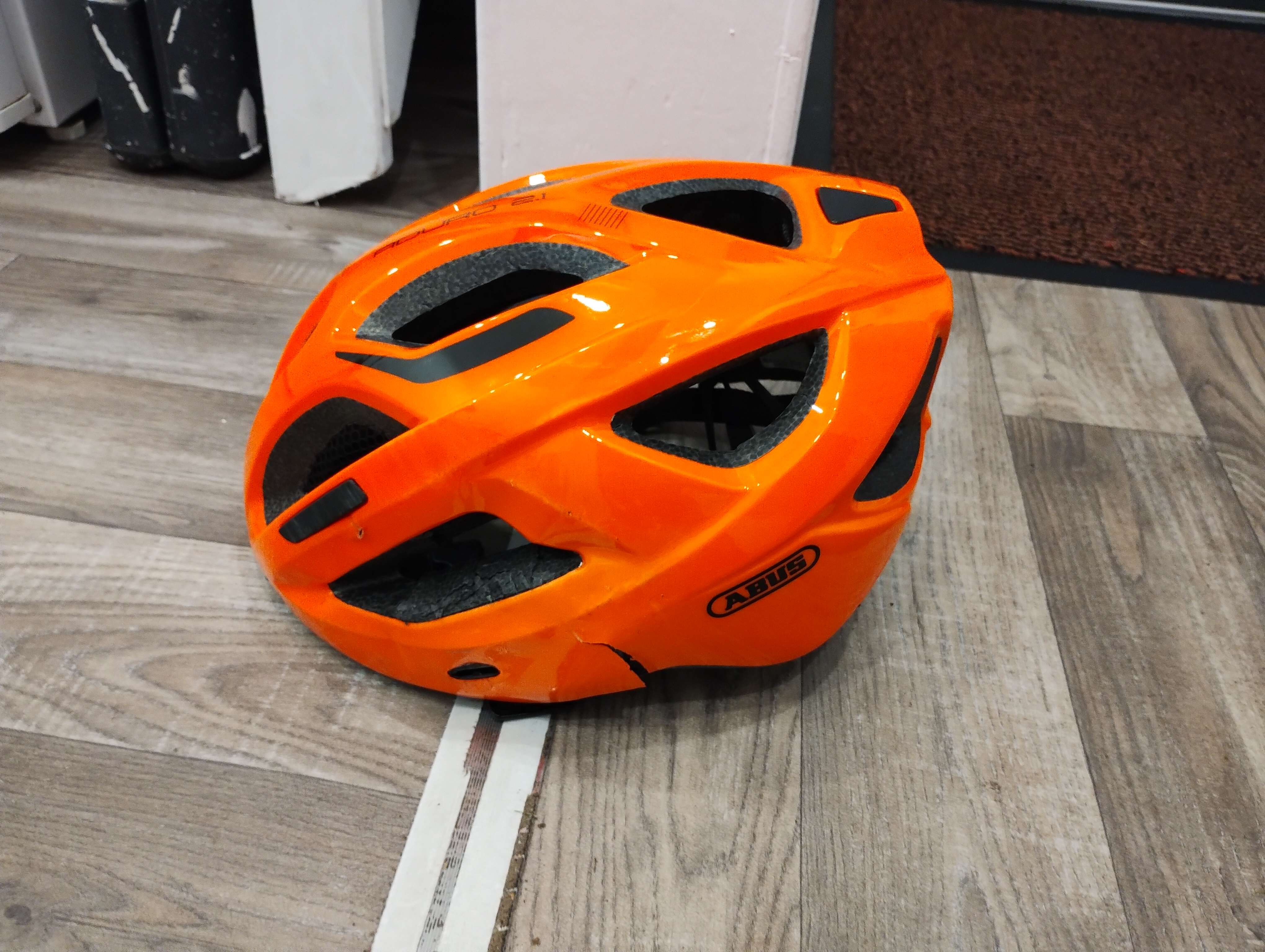
Last August I was out on a club ride and coming down a road I know well in my usual style. As I neared the bottom, a car was starting to come up the hill so I moved over a bit to give it plenty of clearance. The car also moved over and there was plenty of room for us to pass safely so, while I covered the brakes, I didn’t feel the need to back off at all. I don’t think it would have made any difference if I had, because crashing at 25-30mph would likely have resulted in much the same outcome as the actual 36mph crash did. I failed to see a pretty innocuous pothole until my front wheel encountered it and all I have is a visual snapshot of my wheel kicking 90 degrees to the left and the next thing I know is I am on the ground. I had come to rest 45 feet from the pothole and must have tumbled and slid a few times to get there. Meanwhile my bike was a similar distance further down the road with a buckled front wheel and a couple more scraped bits. The car driver was good enough to stop and give me a lift home and my two club mates made sure my bike was taken home too. I broke my left collar bone (it was displaced by 2cm and was surgically repaired); had a slightly collapsed left lung (which kept me in hospital for observation for a couple of days); fractured the tip of my right pinkie finger; and had bruises and scrapes to my elbows, knees, hip and knuckles. My cycling clothes were shredded and my helmet was smashed. If I hadn’t been wearing a helmet I am sure that I wouldn’t be writing this today. With luck I would have been killed outright, otherwise I think it is highly likely that I would have suffered a traumatic brain injury. As it was, I didn’t even lose consciousness, get concussed or have any serious after effects, though I did develop vertigo (which worried me for a while as I thought it might stop me riding a bike again) but even that has essentially gone away. I am a personal trainer with my own gym so I am now pretty much physically rehabilitated, barring a few scars and tender spots.

But this article is about fear, not physical injuries. The first bit of fear I really encountered was a week after the crash. I crashed on the Thursday evening and was in hospital until the Monday. The next Thursday I was sitting watching TV and very aware of my breathing and feeling breathless. Being a former ambulance technician, I have a lot of medical devices, a modicum of knowledge and access to Dr Google and, by the time I had taken a few measurements, I was convinced I was in respiratory distress so got my wife to take me back to A&E. Long story short, there was nothing (further) physically wrong with me (even though I’ve never seen my blood pressure that high) and they sent me home again. I’d had a panic attack.

In the immediate aftermath of the crash I was in my cool, calm, collected emergency services persona that served me well in a previous life. The medics at A&E remarked on it both times I visited. I have always been unusually calm in the face of immediate danger but that doesn’t mean that I am not experiencing fear even if I am generally good at controlling it. And that is something for those reading to bear in mind: if you or a companion experience danger or trauma, the fear may not manifest at the time but might emerge later. There can be an assumption that those who appear fearless are unaffected by the events but that is rarely true. You or your companion may have adelayed reaction – that can manifest in physical signs and symptoms (more on that in the article I should be writing) – quite some time after the actual events. So please be kind to yourself and ask for support if you need it and check in on your friends in the days and weeks afterwards and don’t assume that because they appear calm that everything is ok.
For me it wasn’t until after I had got home from hospital with a repaired shoulder that I even thought about my head and how close I had come to being killed or worse. Being killed at work or during a recreational activity is something I have always understood and accepted intellectually but it is different when an abstract idea is faced in reality. And that took a bit of processing over the last few months, though most of it in the background of my mind, not as a conscious effort or as a therapeutic course of action. I was told to be off the bike for 12 weeks (I know some pros are back racing the day after surgery for identical injuries but they get paid to ride their bikes while I do it for fun) which took me to November and I don’t really ride much over the winter anyway (as I said, I ride for fun) so it wasn’t until the New Year when I started to think about getting back on a bike and properly realised that I was a bit apprehensive about the idea. But I had plenty of good reasons (and a few flimsy excuses) to keep me off the bike so it wasn’t until well into February that I really started to confront the fact that I was a bit more than apprehensive about riding again. I wasn’t worried that I could ride a bike but I was worried that I wouldn’t be able to ride it well enough to make me happy and riding downhill fast makes me happy.

To compound all of this, I manage a cycling club (Ride 63 for anyone who is interested http://www.ridesixtythree.net) so my not loving cycling impacts others too. At a committee meeting in February I admitted to my fellow Ride Guides that I was suffering from a loss of mojo and was met with plenty of sympathy and support. My club is not a traditional road racing club with a ‘toughen up’ mentality so I wasn’t surprised about the care shown but it is always nice to receive it. But as a club we are not all touchy-feely and some of us are more open with our lives than others, but we are a self-selected community of people who have gathered together through a shared interest and love of cycling and have become friends. Overcoming life’s difficulties often takes the support of family and friends but sometimes it comes from our community of acquaintances who might surprise us by stepping in to offer support when sometimes those closest to us fall short of our hopes and expectations. But to receive help you might have to ask for it or at least be open to sharing if things aren’t going well for you. Unless someone knows us very well they probably will not pry into our state of mind because they care about us (and don’t want to intrude), not because they don’t. I’ve learned this lesson several times in several walks of life to the point that I am now open and vocal about mental health in the workplace and life. People are often very quiet about mental suffering because they perceive that they will receive ridicule rather than support (and that does happen) but more often it seems that one person opening up allows others to do so as well. We can all think we are alone in our suffering while not realising that there are many more like us. It takes bravery to admit that you are scared but, if you haven’t already realised it, you need to experience fear in order to have courage: fearlessness is not the same thing as courage at all.
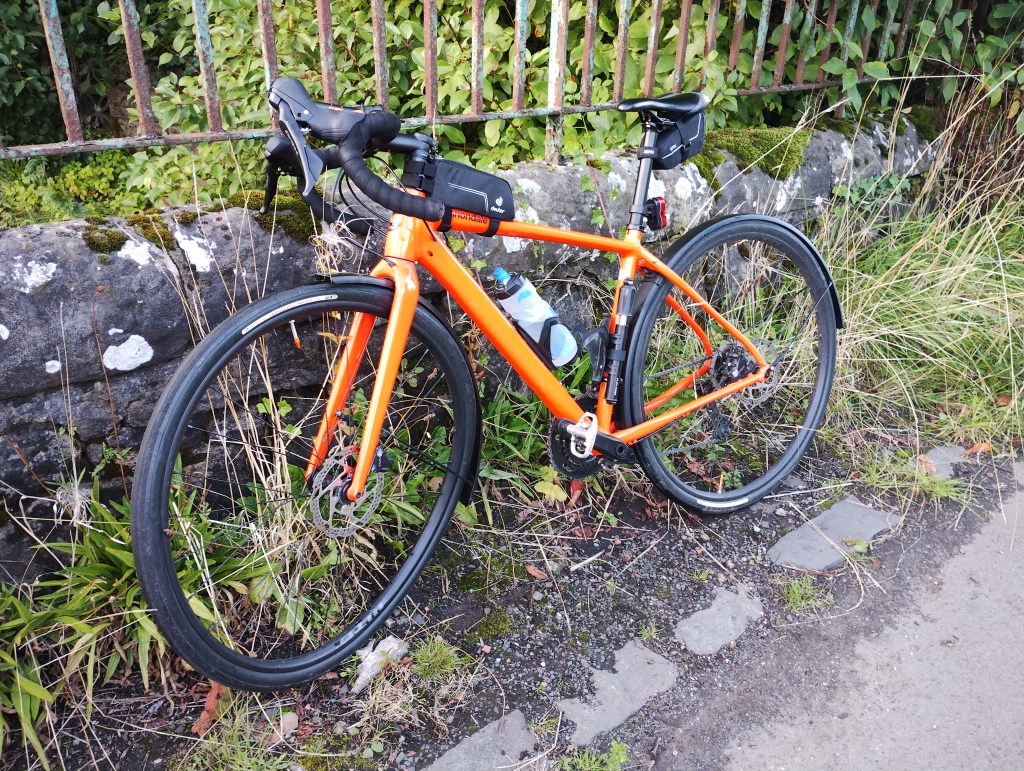
By mid-March I had still not got on my bike but I had run out of excuses as I had (at last) serviced my summer bike (the winter bike that I crashed last summer is still waiting to be fully repaired – what can I say – I am a champion level procrastinator) so on 18th March – almost seven months to the day after my crash – I went for a bike ride. I had not consciously considered riding past my nemesis but maybe my subconscious was at work because my planned route took me very near to the base of the hill. I had walked the site a week after the crash and I’ve driven past it a few more times as well but I would be lying to say I wasn’t concerned about riding it again and knew it was something I was going to have to confront eventually. But about a mile into the ride I was struck by the thought that I would regret not riding straight up and back down that particular hill so that’s what I went and did. I rode up past the pothole (now properly repaired after me putting some pressure on my local councillors) and turned around at the top of the steep, wee hill. I told myself I wasn’t to try and break any speed records but I wasn’t to hang back either and I was not to brake unless I actually needed to. I covered the brake levers (as I always do) and had to control the urge to use them but I got up to 35mph as I went sailing past the site with a grin on my face! 20 miles later I got home with an even bigger grin and a week and a further 100 miles later I know my mojo is back – even if my fitness is not! – and I am apparently descending as fearlessly (and cautiously) as I ever did.

The pothole …. looks fairly harmless, but ‘still waters run deep’. Enough to catch a bicycle wheel and cause an accident.

I don’t need to match my top speeds in order to have fun on a bike and I am sure I will forevermore have an extra voice in my mind reminding me that crashing hurts. But I also know that the very reasonable fears I have been living with for the past six months were easier to overcome in reality than I imagined them to be. Was that because I had spent time contemplating those fears or did I contemplate them too much and blow them up out of proportion? I certainly didn’t need therapy to overcome my fears (this time) but that’s not going to be true of others or me next time (fingers crossed that there is no ‘next time’). None of us know how we will feel and behave in the moment until we are in it. I believe that mentally rehearsing dangerous and scary situations allows me to control them better in the moment but I can’t be entirely certain that it really does, because dwelling on one’s fears can amplify them well out of proportion too. Anyway, enough writing for now. I have to get myself into the workshop to repair that poor bike that has been languishing in the shed for too long. (And for all you true cyclists reading this you will be glad to know that bike suffered less damage than I did.)

@strengthforhealth
@stravaiging_cyclist

The Many Faces of Fear: The Distinction Between Fear and Danger

Another guest blog this week, this time by health, wellbeing and strength training expert, Hugh Wallace, contributing to this ongoing forum addressing the subject of fear in the great outdoors environment. Hugh’s biography follows:

‘Born & lived most of my life as a Scot in Scotland but raised for a few years in New Zealand which gives a different perspective on life. Lover of Scotland’s mountains, seas & wild places. I have seen enough of the world to really appreciate what we have at home: the grass is not always greener. 30 years of martial arts & self-defence. Served briefly in the army, police & ambulance service & longer as a ship’s engineer in the North Sea. Always learning. Now a personal trainer focusing on health & wellbeing through strength. Mainly a road & gravel cyclist these days.’

I hope that Hugh will accept the compliment when I describe him as the person who always wants to find what’s absolutely the very best for whoever he knows, be that in a professional capacity or otherwise – there are no half measures with Hugh! He’s brilliant at finding solutions, offering alternative viewpoints and his discussions are always thought provoking. I am delighted to host his article here. You can find him at: @strengthforhealth and @stravaiging_cyclist.

Fear and danger have fascinated me for as long as I can remember. I have never been one to enjoy being scared (no horror movies for me, thank you very much) and much of my childhood involved me feeling inhibited by fear when my peers were jumping into things head first, apparently without any sense of self preservation. Yet my working life has involved me in professions which have taken me into hostile conditions with sometimes hostile people. Understanding and managing fear is a professional skill that I had to master  – though one I learned about by myself because it was not actively taught by any of my employers  – and it has remained a lifelong topic of interest even if I live a pretty safe and boring existence now (though my current job involves me coaching others through some specific tasks that scare them).

The mountains of Scotland have always played a part in my life. Both my parents were keen year-round hill walkers and my dad was an enthusiastic climber. I summited my first winter Munro before I could walk and mountaineering has been a constant presence (if not always a regular activity) for 50 years now. My dad was a member of the Skye Mountain Rescue Team in the late 70s/early 80s so my earliest memories include him going out on rescues but the more overwhelming memories are the sheer terror I used to experience when the RAF Sea King and Wessex helicopters landed in the field between our house and the hospital. As a young child the noise and wind from a gigantic helicopter landing nearby was very scary indeed. I have a vivid memory of being stuck outdoors in my dressing gown when a helicopter came into land and being unable to get back into the house because the door was locked. I was absolutely terrified yet I was in no real danger at all. [Rather interestingly, I remember this as an out-of-body view of me watching myself pounding on the door rather than as a first-person experience of doing so.]

And that is the point I want to make here: there is a considerable difference between exposure to danger and the feeling of fear. One can be scared witless by their imagination or feel no fear at all when their life faces immediate threat. Understanding the relationship that fear and danger have in your life is one of the key steps to dealing with it and keeping yourself safe.

Those of us who spend time in wild places will be all too familiar with people telling us we are crazy for exposing ourselves to the dangers of the mountains. Some will tell us we are irresponsible and others will go as far as saying people should be banned from the hills! Yet these same people will think nothing of getting into a car and driving (or being driven) somewhere without giving the very real dangers of motoring a moment’s consideration. I remember being told in my early days as a Police Constable that we needed to keep the dangers of our new career in perspective because while police officers are sometimes required to face genuinely dangerous situations the reality is that the overwhelming majority of the job is quite safe and the most dangerous thing we all faced was driving home after a night shift. I can attest to that through personal experience; the worst driving errors I have ever made have not been while driving somewhere at high speed under blue lights but on my way home after 12-14 hours night shifts. Sleep deprivation is as bad as alcohol for degrading driving ability and far too many nurses, doctors, paramedics and police officers have been involved in serious and fatal collisions while driving home. Fortunately I managed to get away with all my silly mistakes without it costing anyone their life or limb but this situation illustrates how our society may talk about keeping workers in various professions safe (such as zero tolerance policies for violence against hospital staff) but neglect to mitigate the gravest dangers they face by insisting on a one-size-fits-all 12 hour night shift policy. But I digress…

Jasmin has already written extensively about various ways we have for tackling the fears we feel and I hope I can add some useful ideas to the already good suggestions. I don’t claim to have answers as such, just observations and personal experiences that you might be able to learn from in your own journey and exploration of places wild and high.

My approach to life – especially challenges – is to try to understand the situation as completely as I can. Knowledge is power because knowledge leads to understanding. The more things I understand the better able I am to deal with new problems as they arise so knowledge acquisition is about breadth as well as depth. But it is not an entirely linear process because repeated experiences (particularly if they are different from previous ones) re-inform what I believe I know and influence the way I will deal with a future problem so learning is a continuous process of looping back over the same material with a new – better informed, one hopes – perspective. Ultimately I am hoping to find one way that works in every situation of a particular type without me making the error of trying to make every situation conform to the solution I believe I have developed (this latter approach is incredibly common in all walks of like). This requires me to be able to properly observe and analyse a situation and not jump to a conclusion too soon and to be honest with myself when looking back on an incident or event and accurately recognise what went well and what did not.

This has led me to read about, study, practise and then put into practice strategies and methods of dealing with fear. Many of my sources are people associated with military and law enforcement but the information they shared is not widely taught or even well understood in those circles. Certainly what I know was not taught to me during my brief stint as a police officer in Aberdeen but I did have ample opportunity to pressure test the theories I had learned. Subsequently I have taken those lessons into the mountains and onto my mountain bike. More lessons were learned there about the importance of being competent and properly equipped and it would be very fair to say that my competence (and confidence) as a police officer far exceeded my competence (and confidence) on a bike to this day! (But that is a topic for a future article…)

The first thing I think we need to understand is that danger and fear are not the same thing and the relationship between the two is not straightforward or linear. I have never considered the mountains to be anything other than dangerous places but I have very rarely felt fear in the hills (except stepping back off the edge for an abseil). There have been times when I have been properly worried about my safety (that time on Liathach when I nearly succumbed to hypothermia can still make me shiver 35 years later) and several more when I have been concerned about others in my party but I have never felt fear as such. On my mountain bike; oh yes! Fear on my bike has seen me grab the brakes without thought – the second time I went head-first over the handlebars I was able to observe the death grip on the brake lever that had led to me landing on my head again – or seen me back off and fail to commit with the inevitable slow-speed off that followed. Fear manifests differently in different people and situations and learning how you respond is important.

I suspect that most of the readers of this blog are not those who feel scared simply by being at the top of a cliff – for actual fear to kick in we need to add in some broken ground, ice and snow, high winds and the like – but I am sure we all know people who are simply terrified by being in a high place. Yet if we (or they) were to stand on a pavement with a four inch kerb no fear would be felt at all. Most would be fine standing on a three foot wall but many would be starting to get twitchy if that wall was six to ten feet above the ground. The risk of falling from a kerb is pretty much the same as falling from a cliff top yet we all know that the perception of risk is very different indeed. (And I wouldn’t be surprised if there have been more injuries and deaths resulting from falls from kerbs than there have been from cliff-tops in recent years.)

My suggestion is that we all take a long, critical and objective look at ourselves when it comes to the situations that provoke us to feel scared. First observe and admit – don’t deny – that fear is present (sometimes the signs are quite subtle) then take time to analyse those feelings. Be honest with yourself. Ask yourself if you are actually in danger or whether you are experiencing an irrational emotion (some of my sources in this field talk about ‘F.E.A.R. – False Emotion/Evidence Appearing Real’) and conduct an objective risk assessment. If danger is present try to quantify it in terms of likelihood and severity of outcome and try to come to rational perspective on what you are feeling. I suggest that this is something best done when you are not in the middle of an epic ridge walk with other people where you have an audience and time pressures to contend with. In fact, you can try doing this from the comfort of your own living room. Imagine yourself into the situation that scares you. Dwell in the feelings it invokes and try to experience the physical sensations as if you were there. It is entirely possible to provoke the physiological feelings of fear (even abject terror) solely by your imagination, that is what horror movies do after all.

But there is no substitute for actually placing yourself in fear-inducing situations. Find a rock garden, a sea cliff or a boulder filled river and practise moving on the sort of terrain that scares you. Approach it as a training session, not simply as something you have to contend with as part of a longer day out. Take a leaf out of the mountain rescue playbook and go and practise and develop your skills in the hills. They might be setting anchors or learning search patterns but you can be ascending and descending through boulder fields. Rocky coastlines and rivers are great places to find difficult terrain or maybe take yourself up that small, unassuming local hill that can be summited within 30 minutes but has a couple of interesting crags on top. Many hill-goers get sucked into the idea that every day has to be a proper day out with a significant peak (or three) ticked off the list but if you want to improve your skills and reduce your fear then some focused training might just be what you need.

With time and thought you can train yourself to remove irrational fears and dampen down the entirely rational ones to a point that they don’t inhibit your actions. It is absolutely possible to deliberately train your brain to not feel debilitating and inhibiting fear but it won’t necessarily be an easy or enjoyable experience. But then, how much personal growth is there to be found in doing easy things all of the time? And it is not as if any of us enjoy the feeling of abject fear that stops us getting on and experiencing the mountains in all their glory.

There is so much more I can share on this subject but I hope this has been somewhat useful and food for thought to those of you who have read to the end. Until next time, stay safe!

Photos: Jasmin Cameron

@strengthforhealth
@stravaiging_cyclist
The Many Faces of Fear: Fear on the Ben

Guest blog by Graham Kelly entitled ‘Fear on the Ben’ follows on from my series of three articles addressing fear as experienced by mountaineers and outdoors sports people. Graham describes himself as: ‘a retired Railway Engineer, a slacker who got lucky, Mountain Leader and Mountain Rescue Team member, regular fell/hill runner and occasional climber.’ I have known Graham since ML training days. He brings a wealth of experience to any mountaineering trip (his biography – which I asked him to write is rather on the modest side) – and I have had the privilege of climbing Tower Ridge with him many moons ago when we were both logging QMDs (Quality Mountain Days) leading up to assessment (although Graham already had so many amazing hill days under his belt by that point in time that I’m quite sure he didn’t need to log even more!). Here’s his account of a more recent trip to the Ridge.

The day started with a simple question – do you want a walk or an adventure?

Given clear skies, a perfect forecast, an adventure was the obvious choice. We opted for Tower Ridge on Ben Nevis. This sits above a simple scramble and below a serious rock climb with an overall grade of 3S including a couple of short sections of ‘difficult’ in the mix. From a personal perspective, it was well within my capability and I had climbed it a number of times over the years.

The walk in from the North Face car park up to the CIC Hut under the North Face was stunning. All eyes were on the steep rock features and lines. There was a sense of anticipation – it was going to be one of those rare classic Scottish Mountain Days.

At the bottom of the West Gully we stopped, time for harness and helmet as the ground steepened. Up into the Douglas gap, the route really starts with a short chimney that leads back onto easier ground. We were moving well and the atmosphere was confirmed by shared smiles.

Graham en route on Tower Ridge – after the ‘incident’ – but still going strong!

We continued up, me leading and my partner seconding. Route finding on Tower Ridge is fairly straight forward and we made good time. Not rushing but not slow by any means. Main belays were plentiful and the rock good, very good in fact. The day was drifting away as we enjoyed the ascent.

Upon reaching what I thought was the Great Tower, I looked for the Eastern Traverse. There was a ledge leading left and, despite an internal note that it looked narrower than I remembered, I took it (first and critical mistake). It really didn’t look right but for an unknown reason I still continued. I brought my partner round before continuing upward and left looking for the wee ‘cave’ pitch which did not appear. I looked around with a sinking sense of realisation I had taken us off route.

I briefly tried to downclimb the last few metres and realised it was beyond me. I tried shouting round to my partner but she couldn’t hear me clearly. With no other form of communication (we only had my phone), I brought her up to the main belay and explained the situation (another possible mistake).

The option was to make that call – 999/Police/Mountain Rescue or consider a self-rescue. I knew that given the time of day making the call for assistance needed to be a quick decision to avoid a technical rescue in the dark. Not too proud to say here I was terrified – not only for the potential consequences of a fall but for my wrong decision which put my partner in the same situation. We discussed options and looked at a series of ledges below that might lead us back round onto the main route. This involved an initial abseil onto a wide ledge before what looked like a short but steep section of rock with a mossy crack to climb before gaining easier ground. Exploring this option wasn’t going to make our position much worse.

I set up the abseil and backed up the anchor noticing my hands were shaking – not a voluntary reaction but an indication of the underlying fear that was dominant now. All I could do was slow down and sense check every decision before committing any further.

Both safely on the big ledge, I pulled the rope through. Strangely, we both snacked for a while, subconsciously realising we were going to need all the available energy in the coming hour(s).

I set up a bomber main belay that was ‘unquestionably sound’ to hold a fall and set off along the ledge towards the steep exit. The early onset of ‘disco legs’ was there for sure. Trying to maintain a slow breath, I stepped up and immediately panicked – the holds were smaller than I wanted and dropped back onto the big ledge. Was this just another bad decision that was only going to make things even more serious? I stuck in a questionable nut for some psychological protection (it was sure to rip if I did fall) and tried again. Getting slightly higher than before, there was only up now available. I shouted: ‘Watch me here’, since I was pretty sure I was about to fall. One short step up and big holds began to appear and I was soon safe. I sat down close to tears with relief.

My partner soon followed and noted with a smile that that pitch has been somewhat more than ‘difficult’.

Back on route the correct line was clear – how could I have missed it? Up to the Great Tower, along the Eastern Traverse and over Tower Gap. It all seemed easy but we agreed to keep it slow, make good decisions with every move. The plateau reached, we decided we needed to head to the actual summit before descending. It felt important to round off the experience on a positive note.

The sunset was incredible, we had the place to ourselves and we agreed that how we had worked together had actually brought us closer as a couple. No blame, no shouting, no hindsight …just working to find a solution.

Stunning skies on descent

Down at the Halfway Lochan [Lochan Meall an t-Suidhe], we headed over to pick up our path and dropped back to the van in the North Face Car Park. We arrived at 1am, made some soup and shared the last beer before crawling under the duvet to sleep. The sense of relief was as much physical as emotional.

In the hours, days and weeks that followed, that fear of ‘what might have happened’ echoed and took me back to the point where we effectively became crag fast. This was clearly a short Post Traumatic Stress response and entirely normal given the gravity of the experience. Discussion with my partner and acceptance that my complacency with regard to route knowledge, which was further by not listening to my own doubts, were the root causes. The frustrating thing as a Mountain Rescue Team member is that this went against everything we do in training – there is a whole other post about Human Factors that will answer that one …

Has it stopped or dented my passion for the mountains? Absolutely not!

Has it changed how I approach journeying through the mountains? Absolutely!

Fear in the right dose, can be a positive. In fact, it might be the very thing that keeps us alive.

Two very happy climbers – after a rather eventful day. An adventure … by every definition of the word.

The Many Faces of Fear … (Part Three)

Parts One and Two of this series have examined what fear is, how it might manifest and how we as individuals can try to deal with it.  In Part Three we’re now going to flip this on its head and look at fear from another angle – by considering how to help someone dealing with fear.

Some suggestions are:

Avoid trivialising, becoming impatient or telling someone that they’re being silly (yes, it does happen!). What may not look like an issue to you is very real to the fearful person. Telling someone to ‘get a grip’ will just make matters worse as poorly treated fear will simply lead to a further lack of confidence – meaning that the person may no longer even be prepared to go out on the hill in the long term. It can also lead to loss of friendship, trust and/or blazing domestic rows if your fellow mountain-goer also happens to be your husband/wife/partner. I’ve had some of my very worst arguments with my other half out in the mountains – usually occurring in very echoey corries when the heated discussions are amplified to be heard be everyone out in that area…

Try to understand the root of the fear.  Sometimes a seemingly irrational fear has a deeply buried cause. Try also to understand your own expectations of the person if you have been the one to pick the route – even if you thought this was what they wanted to do! If it was their choice and their planning, this is not the time for saying something along the lines of ‘well, you’re to one who wanted to do this.’ Try to find out if this is this a case of ‘I’m on steep ground that I’m not comfortable on/have never really encountered before’ that may need talking through. Or is it ‘I’m on steep ground of the same type where I had an accident a few months ago’? Is it that the wind is so bad that it’s virtually knocking them over? Have they experienced this kind of brutal weather before?

Photos: Exposure too much? Change the route …

Help the person to breaking down the fear into components. Talking through the situation can help (without being patronising). Some situations may demand you taking charge: ‘OK, so first let’s get off the steep ground – we can stop up there – so do you want to follow me closely?’ It may be that foot placement is the issue, if this is the case, lead by example. It may be that fitness levels are the issue – the person is unable to keep up, can’t see the route that you’ve taken and starts to flounder.   Ask the person what might help them – present them with suggestions. Once the feared terrain/part of climb/river crossing etc. is past, try to have a discussion to get to the root(s) of the issue.

Reassess the remainder of your route and if necessary, and possible, adjust so that your acquaintance is comfortable. But don’t make a show of doing this. Do this ‘tacitly’.

If there is another option, offer this to them. Granted, some routes are committing and going up is usually easier than going retreating and going down. Explain this. But if there is another option, give the person that choice – and don’t make them feel bad for not confronting the issue that was causing them to be fearful. Sometimes by the very act of offering that choice, the person will continue on the original route and overcome their fears to complete whatever it is…

Sometimes the fearful person simply needs to feel in control of the situation and be able to take the decision to retreat or change the route.

Whatever the consequence of dealing with fear on a hill day might be the important thing is that everybody stays safe. The action that ensures no accident occurs (worst case scenario) as a result of ploughing on with a person (or people) in tow who are really struggling with lack of confidence is the correct one. Continuing regardless can result sowing (or digging in!) seeds of fear that will only resurface at a later date. Yes, plans may have to be altered, or a group may take the decision to split up and pursue different routes, but ultimately any decision made must be in the interests of safety.  We’re back to that old adage of ‘the mountains will always be there for another day ….’.

Grim determination overriding (excuse the semi-pun) fear: approx. 12km into an endurance ride, just before which my steed had demonstrated her exceptional ability in aerial acrobatic displays and proceeded to be decidedly twitchy as we left the START. I spent most of that ride being totally terrified, but had to deal with it – and deal with it fast – as horses pick up on their rider’s state of mind and react accordingly…. Photo credit: Kris Clay

And just a couple of closing thoughts:

Situations do happen whereby everyone may be experiencing fear – but there may be that one person who simply cannot contain being frightened. Fear can be contagious, particularly if a scenario feels like it’s escalating rapidly/actually is escalating rapidly. The person or people who end up taking charge may simply end up with that role because they are low on the ‘being scared’ scale, but at the same time having to manage others can suddenly become a huge responsibility. If you have ever been in an extreme situation like this – whichever end of that scale you’re sitting at – it’s perhaps a good idea to talk through honestly afterwards rather than harbouring any ill will should brusqueness of tone, or direct speaking have taken place – it does happen!

My way of working through my fears in the past (many of which have been anticipatory!) has been to get out and sort the issue out all by myself wherever possible. Sometimes it’s easier to work through whatever the problem is when you’re by yourself (in a relatively controlled environment) as you don’t have to feel remotely guilty about holding someone up while you dither around trying to sort your head out. Do I get scared? Yes. Will I be scared when I am confronted by the same kind of downhill terrain that caused the accident that I’ve just had? Yes, I will be. And at this point in time I have no idea how I am going to react. After seven months of being away from the mountains I do have a choice. I either give up mountaineering or I go back and sort my head out. But the call of the mountains is so strong right now that I know I will be back … I need to put my accident into perspective and set it against the many, many hours I have accumulated in the mountains over the years, in every kind of weather condition, over all kinds of terrains, pushing myself to extremes at times.

And besides that I very much look forward to resuming my guiding duties once again!

Torridon: I can’t wait to get back there – to climb those hills again …

The Many Faces of Fear … (Part Two)

Dealing with Fear

Part One of this blog examined the different types of fear that may be experienced by mountaineers/hill goers and then moved on to consider how fear comes about – essentially what the triggers might be.

The next step is to address how to deal with fear from the perspective of the person experiencing it:

First, it’s a good idea to try to break the fear down into its ‘facets’ or components – try to deal with each ‘facet’ of your fear. Sometimes the facets may have an order with which they need to be dealt, so sometimes Issue A has to be addressed before you can deal with Issue B and so on.

Strategies can include:

Desensitising. For example, with steep ground. The more you are exposed to steep ground, the easier you will find it. Take it gradually, build up slowly. Learn how to move and about foot placement. River crossings: start small and shallow, practise crossings in a relatively safe environment. Learn about strategies for deeper crossings before moving on. Boulder fields: start short and on the level or going up, before then trying going down. Don’t put yourself under time pressure.

Internal dialogue. Keep talking to yourself. It doesn’t matter whether this is in your head or out loud. It doesn’t matter whether it’s a dialogue (although it would be a little worrying if it became shades of Gollum and Smeagol!) or a monologue.  

External dialogue (if you’re with someone). Communicating your fear to others in a coherent manner – before you’ve become a complete gibbering wreck. ‘Sorry, guys, I’m really not comfortable on this terrain. Is there any advice you could offer/ could we slow down a bit etc.’?

Knowing the people that you’re out with. What are their capabilities, what are their aims for the day? Does this match to your abilities and what you want to get out of the day? After all, you probably don’t want to spend the day in a state of paralysing fear if your group are planning an extreme route that’s way beyond your comfort zone.

Taking control of the situation. If you need more time, take it, or let whoever you’re with know that you need more time or that you need to be included in decision-making processes.

Thinking hard … once the brain is engaged fear dissipates …

Controlling the initial fear, which may then escalate.  Control your mind. Prevent it from running from one thing to another.

Are there practical steps that you can take to give yourself more confidence (as lack of confidence can lead to fear)?  Is there another option? Are you making yourself do this?

Ask yourself what exactly is at the root of your fear. A good while ago I had an accident while practising the ‘classic’ abseil. The ‘classic’ abseil involves abseiling using just the rope (no climbing harness involved). It’s a particularly risky technique as it’s possible to pivot out of the rope hold. I didn’t fall head first, but I did manage to swing around and smack the base of my spine into the rock face that was at right angles to the face I was descending. My first stunned thought was, ‘that rock is actually hard!’ My climbing buddy hauled me back up and I staggered around at the top, not wanting to admit that my legs weren’t working properly. To cut a long story short, yes, I ended up with a wee visit to A&E. Yes, they kept me in for observation (if only to stop the insane person lying on her back on a hospital trolley (who really needed to allow her spine time to recover) from heading out into the Cairngorms the following day carrying an full expedition pack). I was ‘banned’ from going the mountains for six weeks in order to allow my lower back to recover – six whole weeks, can you believe that (updated note – I’m up to six months now recovering from this broken ankle. If you’d told me back then that I would have to be away from the mountains for that long, I think my brain wouldn’t have coped…)? As a consequence of this accident there’s usually a very slight delay before I commit to going over the edge on any abseil. Many people delay before committing, but mine is a slightly different delay. It’s a real ‘It’s gone wrong once, it can happen again’ delay. It’s a real ‘I’m not happy doing this’ delay. My head usually replies ‘For heaven’s sake – stop belly aching about this and JUST GET ON WITH IT’. That usually works for me.

Dealing with your fear in step-by-step stages.  This may be mentally or it may be in more practical sense.  I had to break abseiling down step by step in order to be able to stand any chance of being able to do it ever again. So the first considerations were help and equipment and obviously avoiding re-starting with the ‘classic’! I began with a climbing harness, belay plate, standard climbing rig plus a separate safety rope. The next step was to go through the motions of preparing for the abseil and checking, together with the very understanding Mark, to convince myself that everything was secure. Step-by-step. The next stage was to stand at the edge and contemplate going over. Step-by-step. Next, to actually go over. This proved the sticking point (even though the accident had happened when I had been on the abseil, not launching myself). Step-by-step. Well, this step took me near 30 minutes. Back and forth, to and fro between the anchor and the cliff edge. I remember feeling sick with fear. I remember saying to Mark, ‘I’m going over this time’ on countless occasions. But, finally, finally, I did it. Mark completely understood that it had to be my decision and that I needed to have that control. He was incredibly patient and there was no pressure on me to go over the edge whatsoever. And once I was on the abseil, with the benefit of the standard rig (rather than just a rope), it really wasn’t that bad.  Step-by-step. Over a period of some weeks and different venues, the safety rope was removed. Then came the day when Mark said (quite casually), ‘Right, you’re going to abseil using just the rope today.’ That put me back into a state of fear again, but by then I was actually ready to face that particular demon. I opted for the South African abseil technique rather than the ‘classic’ – and I do recall that it was a very long drop, but I did it – I had got there and overcome my fear. It was a case of step-by-step, but also a case of desensitising.

Preparation (a mixture of mental and physical preparation): What do you know about your route? If it’s the navigation that worries you and you know that conditions are going to be challenging, spend time with the map, familiarising yourself with the terrain and the types of strategies you will be using. How steep will the ground be? If scrambling read up on your route. If boulder fields are your nemesis, are there any bouldery areas nearby that you can practise on beforehand? Visualisation of your route can also help – research on the internet. Where is the crux (if scrambling of climbing) and at what point on your route does it occur?

Careful preparation: from packing all that you need to careful route planning. Both can help allay fearful anticipation.

Knowing how to calm yourself down in that panicked situation. What works for you? Is it breathing? Is it talking to yourself? Is it stopping briefly to sort your head out – or does this make matters worse?

Thinking yourself into someone else’s shoes. This is a strategy that I have sometimes used to cope with my stage fright as a musician. The second I’d walk out on stage to perform, I’d transform (in my head) into this very calm, competent person who was in complete control of herself and the instrument. The bizarre thing about musical performance is that at times when you’re up there performing it can feel as if the instrument is controlling you rather than you having any say in the matter. However, the point is that this exactly same technique can work for being in the mountains – and reassuringly, I have never got the impression that the mountain environment was ever controlling me in quite the same way a musical instrument seemed to be  – but then again I have never really suffered with summit fever – perhaps that would be a different matter altogether!

Some of the time there is another option. Don’t be afraid to take it if this is what is right for you. Be aware that sometimes the ‘other’ option isn’t necessarily an easier one though! But if it is you can use it to take yourself out of your fearful situation and re-address the whole issue another time.

Considering the exact risk involved. Is it time to beat a retreat before ground gets too steep or complex?

Of course, it’s not always the easiest thing in the world to apply these strategies ‘there and then’ in the heat of a fearful moment. …. and the other factors that come into play will concern other people (if you’re not out by yourself)  – how many people in your party, how many different agendas, how many different level of skill and experience? And obviously, some situations do not permit the luxury of analysis as events or circumstances dictate otherwise (things are moving too fast in a dynamic situation where action needs to be taken for the sake of safety).

In Part Three we will consider how to approach dealing with a fearful person out in the mountain/outdoors environment. It’s also helpful to have an awareness of what these approaches might be if you happen to be that fearful person, but more on that in Part Three!

The Many Faces of Fear … (Part One)

Noun: an unpleasant emotion caused by the threat of danger, pain or harm*

Verb: to be afraid (of someone, something) as likely to be dangerous, painful, or harmful.*

This blog was written quite a while ago, in response to both clients and friends seeking advice. It’s ironic that just as I have finally got around to publishing it, I find myself having to start to confront my own fears about mountain terrain. Last summer I sustained a broken ankle slipping on loose material on a hill track. All would have been well had it not been for a football sized piece of rock, also on the move, that my left boot wrapped itself around – and then due to the gradient of the track the momentum of my body plus rucksack forced my leg over the offending rock. Both my leg bones snapped. I felt them go (shudder). However, for once, I was out on the hill with Iain. I think of all those times that I could have had some kind of accident while out in remote areas alone with no phone reception (just one of several fears that I will now have to overcome when I start going back out to the hills). So it was serendipitous that he was with me that day – but also that we were on our way down and about 15 minutes from the car park. We were also extremely fortunate that three very amazing people stopped (in two cases abandoning their ascent of the hill) to help get me down. We removed my boot and used my first aid kit contents to stabilise the ankle (I always carry a splint with me – I never dreamed that one day it would be deployed on me!). It took well over an hour for Iain, Rhys, Daniel and Dave to carry me down. I am immensely grateful to them and by way of thanks dedicate this post them.

Make no mistake: I will be needing to heed hefty doses of my own advice as I start my very long journey back to mobility and mountain fitness!

Fear experienced in the mountains tends to be caused by different factors (‘internal’ and ‘external’ – either or both – and any number) and if left unchecked can rapidly escalate. The way it manifests and is eventually expressed can depend a) on the individual b) the situation that they’re in and c) the people that they’re with. Once we recognise that fear can be a triggered by several (usually interrelated) factors, then, if we establish what these reasons are, we can try to deal with them one by one in order to overcome the overarching issue.

Most of us experience fear at some time or other when we’re out in the mountains. This is normal, but what matters is how we both deal with it and contain it. For some people that ‘fear’ threshold can be lower than for others, maybe because of their personality type, or perhaps there’s a past experience that triggers a fearful reaction. Or maybe because they’re being thrown into a situation they’ve never experienced before and, as a consequence, feel completely out of their depth.  Some people are able to analyse a fear-inducing situation in a coolheaded manner, deal with how they feel about it and move on with little or no difficulty, while others may have the ability to hide their fear very well while addressing the situation. But some individuals may not be so good at hiding their feelings. Finally, there are also those who get a real buzz out of fear and will channel this as a motivator to increase performance.  

What’s running through your mind?
Very steep bouldery ground, unconsolidated snow? Plus it’s a very long way down?
How do you react? How do you feel?

Whatever the reaction, fear is not an emotion to be dismissed out of hand. I would even suggest that those who feel no fear whatsoever at any time are a cause for concern as they can be blocking danger signals. Fear, after all, is ultimately about self-preservation: it’s an early warning system so it may be telling you to proceed with caution due to (for example) environmental issues (e.g., avalanche risk) or to recognise the extent/limitation of your own experience/ability to deal with a situation. It can be pretty important to heed that voice and respond accordingly by assessing the risks and your skill level to help you work out whether your fear is valid – and why it’s valid – so you can overcome whatever obstacle – or decide an alternative – or even to retreat. Sometimes you may need to dig deep in order to understand why your early warning system has been triggered (past negative experience, perhaps?). Finally, it’s also worth remembering that levels of confidence – and hence fear, which is closely associated – can vary, in some cases quite dramatically, from day to day and from one time of day to another (walking in daylight/walking in twilight or darkness), not forgetting deteriorating weather conditions etc.

So first, let’s consider ‘types’ of fear:

  1. Fear of the unknown: you have no idea what that route or day is going to be like, but you can imagine it. It grows into something impossible and terrifying, or worse – that unknown intangible something that you just can’t get a handle on. Uninformed visualisation (aka imagination!) is not always helpful.
  2. Fear of the known: you have knowledge and experience that you bring with you to your mountain day, but this isn’t necessarily positive knowledge or experience. You’re already set up to experience fear and it continues throughout the day.
  3. Anticipatory fear: akin to stage fright. Butterflies in stomach, sticky hands, raised heartbeat. Recedes once you’re committed or busy.
  4. Fear in the moment: occurs as you make a particular scrambling move, or suddenly find yourself on a gradient that you are really not happy with, or perhaps being suddenly completely fazed by finding yourself in zero visibility conditions.
  5. Paralysing fear: this is where you freeze and cannot move.

The different ‘Faces of Fear’ themselves derive from various emotions, complexes and awarenesses, also physical environment and external circumstances.

  • Fear feeding off fear. It starts off with: ‘That’s a steep drop.’ Followed by: ‘And there are huge rocks, so if I fall I’m going to do myself same damage.’ Then: ‘And the ground is slippery… and loose.’ Leading to: ‘And my rucksack is pulling me off balance…’ In this case niggles that may have been at the back of the mind come crowding to the front and fuel that initial fear.
  • Fear feeding off lack of control. ‘I don’t want to take this route. I wasn’t consulted about this. I can’t cope with this.’ Or ‘I need more time to mentally commit before making that move – don’t tell me I have to do it right now.’ (scrambling or climbing).  I remember sitting on a summit out in the Alps, roped up and being told to get on with it. The problem? Amongst other things, lousy conditions. While I couldn’t see the huge gaping drop, I knew it was there. I had to transfer myself from the boulder I was sitting on to a flattish rock, but, because I’m rather vertically challenged heightwise, this involved a jump rather than just being able to step across, the way most others were doing. The move was complicated by the fact that I had to do this in crampons onto a verglased surface and that the person behind me wanted to get on with leaving the summit. So there I sat, trying to psyche myself up to make that move. I needed to have control over WHEN I made that move. The trouble was that the person behind had other ideas and was now telling me in no uncertain terms that I had to move IMMEDIATELY  – and then started to push me. (He got rather short shrift from me …). Eventually I made the jump about 30 seconds later, after an internal dialogue about trusting my crampons and acknowledging the fact that I was roped up – but the point here is that I did not feel in control of the situation. Due to extremely busy conditions I was not being allowed to take the time to rationalise and deal with my fears and move on under my own terms.  
  • Fear stemming from a lack of confidence. ‘I can’t do this. I failed to do this last time, how on earth can I do this now?
  • Fear developing through inferiority complex. ‘Everyone looks so calm and competent. Look at how easy they make that look.  There’s no way I can do what they’re doing. ‘ [This can be turned on its head to become, ‘If they can do it, so can I.’]
  • Practical factors leading to fear such as lack of fitness, lack of skills can also contribute to a situation where a person might recognise these shortcomings and the consequent potential danger. Also: (for example) a storm moving in, white-out conditions, challenging terrain etc.

In Part Two, we will examine strategies for individuals to help dealing with overwhelming fear experienced in the mountains.

[*Note: Definitions of ‘fear’: https://www.google.co.uk/search?q=fear+definition&ie=&oe=]

After 103 Days of No Mountains (aka Lockdown) …

P1080711

It was going to be as soon as the travel restrictions lifted.  A day in the mountains. Nothing, but nothing, was going to stand in my way.  Not even the totally lousy weather forecast. Iain soon gave up on any attempts to disuade me. He just about managed to stop me from driving to the 4.99 miles boundary in the late hours of 2nd July with the intention to immediately set off for the mountains as soon as midnight had struck and Friday 3rd July began.

Overcast and grey, very windy and heavy rain. Long trudges over boggy terrain, no views or shelter at the summit, midges galore, hefty doses of leaking waterproofs. All the ingredients that would usually make a summer mountain day extremely sigh-worthy. But after over three months enforced distancing from the moutains neither of us cared.

P1080732

P1080750
Very wet and very windy at the summit …

slide3


A Tantalisingly Varied (and Rather Windy) Winter Season Cut Short

It’s week 10 of lockdown here in Scotland. I have had a reminder in my diary to write and then post this blog that has been transferred from one week to the next, but week after week this task has been left untouched. Why? Well, we each have our own way of coping with the restrictions placed on us during this time. Some rely on photos to trigger memories of epic mountain days. Others may read up and plan for that time when the freedom of the hills is allowed to beckon to them once more.  Some may head out for the permitted local walks, and gaze longingly into the distance (if they’re lucky enough to be in an area which affords views of the [distant] mountains).  I find the easiest way to deal with the lack of access to the mountains is to kind of ignore their existence. This was certainly the way I had to handle matters in early and late 2018 when I was ‘out’ due to injury. My answer was simply NOT to look towards the West, NOT to look towards those distant mountains (and yes, we can see them from our local paths on the outskirts of Aberdeen). But then I guess that we all have our own way of dealing with different situations.  And so this is the reason that this blog has been greatly delayed – I just haven’t wanted to think about the mountains – or, for that matter, look at my photos.  But now the time has come to write something ….P1070398

Winter proper did eventually arrive (around mid-February) and with it came many, many days of extremely windy weather. Getting out into the mountains is all about making careful judgments through monitoring weather conditions at the best of times – and in winter, it is also about being avalanche safe. I’ve been out in the mountains on enough windy days to know exactly what my limits are. Being physically knocked down by a gust really puts you in your place, while crawling on all fours or being pinned to a rock unable to move because of the wind encourages a healthy respect for this powerful entity.  And – let’s face it – being out in the mountains in windy weather is plain old hard work.

P1070379
Still waiting for full winter.

There are rucksacks …. And then there are rucksacks … I finally managed to sort out my winter pack issue this season and my conclusion is that there’s no getting away from it: due to my very short back length, my options with regard to a suitable winter sack are somewhat limited, to put it mildly. The two knock-down bargains (i.e., purchased in various sales over the years) that were loitering in the loft – and that had I felt so very smug about acquiring – were piloted before the snow truly arrived and both proved to be useless. A back system too long for me (yes, yes, they were women’s back systems) meant the load ended up hanging away from my back with the chest strap making its very best effort to strangle me. Sigh. Back to the drawing board. Something large enough for winter kit and robust enough to take the weight of all the ironmongery, rope etc. was what was required. The eventual solution weighed in a whopping 2.6kg before I had even put anything into it. But the back system, set to its shortest setting for once truly fitted me. Conclusion: I just have to deal with hauling an extremely heavy load in winter and cutting a rather laughable figure as the sack looks disproportionately big when I am carrying it (‘What do you have in there???’ ‘Are you out overnight???’). And so it started – the gradual building up of carrying (what was for me) a very heavy load – and with a bit of time and patience, carrying the full rucksack was no longer an issue (an issue that featured a few years ago in When is Heavy Too Heavy?).

P1070583

The World’s Best Faffer?  Really, this is not an accolade of which to be proud.  2020 was my first winter season back on the hill for a while (I’d been forced to miss the past two years). The first issue I encountered was not really remembering what really worked for me in terms of clothing and kit – and also not recalling just how bad I was at faffing at the car in temperatures hovering around zero (I take far longer than in summer). It goes hand in hand with being a procrastinator and indecisive person to boot.  The first winter day I was out proved to be a mahooosssive 45 minutes before I left the car. Kit was everywhere.  I frantically tried to remember the order in which order I used to pack winter gear into a sack. Heads turned with incredulity to survey the wild array of equipment lying around the back of the car as others drove past that first morning. My situation wasn’t helped by the ground being very icy in that laybay, so I was desperately sliding around as I tried to repack the rucksack. And after a few weeks of this, there came the dawning realisation that I tend to semi pack the rucksack and then throw the rest of the gear in the back of the car the night before, thinking to quickly (ahem…) add it to the pack when I’m parked up at my starting point. Solution: Not to be so darned lazy the night before departure.  I don’t do this when I’m guiding – everything is all organised and shipshape, ready to start my day ahead of departure time, so why allow this to happen at other times? … think about how much precious hill time I’ve been wasting….

And that’s not the end of it …oh no … the other faffing problem was out on the hill itself. One trip I actually attempted to keep track of how much time I was losing on an average winter hill day – also how many times I stopped. The numbers were rather embarrassing: at first I didn’t want to believe that I really could be that inefficient. Diagnosis: not having items to hand and ready to go. Just not being quick enough with changing over different items of kit. Indecision. Solution: pep talk – ‘JUST GET ON WITH IT’, awareness of bits of kit that have the potential to slow me down, thinking ahead – can I foresee that I will need another layer as I come out of a more sheltered area (seeing as I’ve stopped anyway)? (Debate: Grivel C2 crampons with LONG straps v. Charlet Moser C2s that are much less problematic. Debate: am I ever, ever going to wear the Grivels with those instruments of torture, the Scarpa Vegas (my double plastic boots) ever again – the only time I’m ever likely to need such long straps – or do I simply shorten them to a more suitable length??).P1070666

‘Let it snow, let it snow, let it snow….’ By late February I was in the disciplined mode of making sure that I went out for at least one QMD (quality mountain day) every week. Finding a suitable day often proved somewhat challenging as I had to work around other part time work commitments. As already noted, in winter, weather and snow conditions make assessment, planning and ‘being out there’ a dynamic situation. It involves endless tracking of weather and avalanche forecasts – and if you’re not sure where exactly you’ll be heading from one week to the next, this means tracking all forecast/avalanche areas in Scotland. This particular day had snow forecast, but not until later …. so I headed out to Braemar, calling in at the local mountaineering store to just run a quick further check on what local opinion was of the weather that day.P1070680 It was already starting to snow as I headed to park the car at Linn of Dee and intermittent flurries continued all the way to Derry Lodge. As I headed up Glen Derry, it really started to come down, and as I headed for the col between Meall an Lundain and Beinn Bhreac it continued to get heavier. Underfoot conditions were incredibly hard going. I was constantly sinking up to my thighs in wet, heavy snow, hauling one leg out, shifting my weight only to sink deeply in again, this time on the other leg. Beinn Bhreac in summer is a nice easy and relatively short Cairngorm day, but on this occasion, it turned into a mammoth undertaking.  It took me two and a half hours to cover the mere 2.5km to the summit. The falling snow was relentless, higher up the wind was really battering the top of Beinn Bhreac. The endless effort of taking steps was incredibly draining. As I slowly ploughed my way back to the main path it became evident just how much snow had come down while I had been out. The walkout from Derry Lodge was in the dark, by this stage the winds had dropped, the skies had cleared and the waxing crescent moon provided more than sufficient light for me to see where I was going.

Whiteout: The next objective was Monadh Mor ( Cairngorms, ) from Glen Feshie – crossing the Moine Mhor. A front was due to come in during the day, with low cloud predicted to gather on Western hills.  For the Cairngorms wind speeds were supposed to be negligible with the odd snow flurries, but it was expected to stay dry for most of the day (70% chance cloud free Munros), but cloud base may be down to 800m in snow showers, perhaps more extensive in the afternoon, patches of sun (east), visibility good but reducing in snow flurries. Minus 3 at 900m, freezing level 500-600m during the day. Avalanche conditions: Low, moderate above 900m on N, NE and E slopes in Northern Cairngorms and N through to SE slopes for S Cairngorms.

Hmmm …. The weather changed pretty rapidly as we made our way up the trade route from Glen Feshie. Not long after we parted company (as Iain decided he wanted to head to Angel’s Peak – skimming rapidly along on snowshoes), the cloud base dropped to around the 800m mark – and anything above this was in whiteout.  For both of us, on our respective journeys, this meant hours in the white room. This was totally disorientating at times, with no real idea of what was up or down. Distances, when the cloud thinned or dispersed were totally skewed. With no points of reference, walking on the compass bearing (solo) turning into a time consuming challenge. P1070787I was constantly needing to check that I was walking in a straight line by checking the back bearing. Slow progress. I reached my turn around time, but decided to ignore that – I had a head torch,  I knew where I was, I had a realistic idea of my return route, I knew what the snow conditions were like, I knew which slope aspects I needed to avoid, I knew that I had to be alert (!) to changes in conditions, I was prepared to walk out in the dark – so I went on. Slow progress on Monadh Mor, but eventually, by my reckoning, I was on the summit ‘ridge’. Of course it was near impossible to see too much, but I located the summit cairn (heavily disguised by snow), took a very brief breather and started back down and across the Moine Mhor. The advent of night caught up with me as I was making very slow progress back to the col area near Carn Ban Mor. The moon showed itself briefly as I stopped for a couple of short breaks to deploy axe and crampons for descent – followed by the 5km walk out. Late back to the car (later than Iain) and very late back into Aberdeen (which is a long way from anywhere at the best of times).

Fresh Snow Fall: Drumochter Hills East. Fresh snow down to 400m, which made for hard going underfoot, particularly where the snow had collected on lee slopes. The day started beautifully, but the cloud gradually moved in and by the time I headed down, the wind had picked up sufficiently to be blowing the loose snow around, rapidly covering over any tracks left by those who had been out on the plateau during the day. It had that ‘I’m the last person out here’ feeling as I descended towards the road.

P1070988
Stunning, stunning day!

That ‘Perfect’ Winter Day: No words needed, really! Drumochter Hills West this time. Stunning, stunning day with amazing light conditions.  It was so beautiful that it was ‘otherworldly’.

The conditions underfoot were not quite as tiring as the previous week, The crust of snow was not strong enough to support any weight, so I was constantly sinking in where there were accumulations, and the tops were scoured by (surprise, surprise) the high winds of the past few days, leaving an icy underlay with a light covering of snow over it.

P1080050
Back to the Cairngorms

The Last Day Out: The final fling. By this point we knew that it was inevitable that the mountains were going to be ‘closed down’. All the signs were there.  We headed for the Eastern Cairngorms, where we climbed Beinn a’Bhuird. Conditions were pretty much perfect, and the mountain was pretty much deserted, even better underfoot than previously. The sight of the snow-P1080083bound, ethereal beauty of the main Cairngorm massif was deeply moving. It was a bittersweet experience, knowing that we would have to accept that we were not going to see these mountains for a very long time, but that we were incredibly privileged to be out there right there and then.
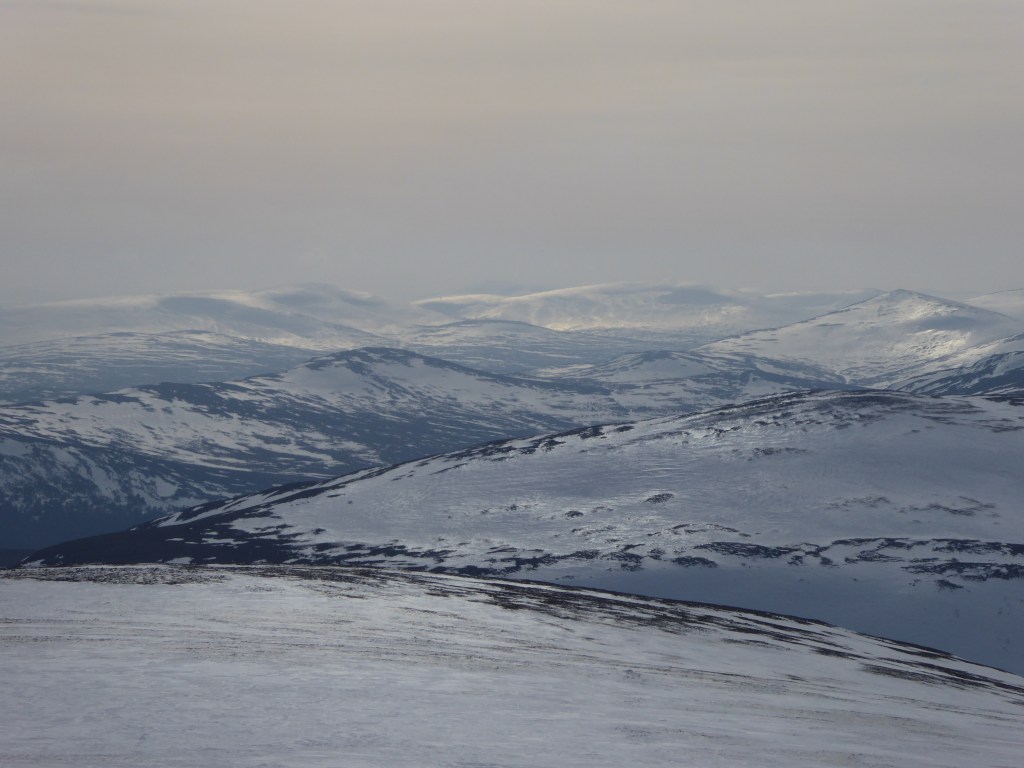
Winter was set to continue: the winter seasons are so inconsistent now that you can never know from one year to the next whether a proper winter in the mountains will happen at all. That’s why any opportunity needs to be seized – never wait, as in addition, winter conditions can be really fickle: here one day, gone the next. So to be aware that winter in the mountains was continuing as we entered lockdown was tough, as tough as effectively losing our freedom.*  But in the end, as with most things in life, the present situation is only a ‘passing thing’ (J.R.R. Tolkien). I will be back.

P1070993

*Of course, the lack of freedom is but a minor gripe (I am not unaware of this) when so many others are going through extremely difficult times due to the pandemic.

[Note: ‘Let it Snow!’ was written by Sammy Cahn and Jule Styne in 1945 and has been released several times (Frank Sinatra and Dean Martin were amongst those who recorded their own versions). J.R.R. Tolkien’s Samwise Gamgee, on the miserable journey through Mordor, briefly sees a star appear: ‘[…] the thought pierced him that in the end the Shadow was only a small and passing thing: there was light and high beauty for ever beyond its reach.’ (Return of the King).]

P1080086

My thoughts are with all those whose lives have been impacted by the devastating effects of COVID-19.

slide6

Places Wild and High will resume guiding in accordance with the recommendation of  government and professional bodies. Please do not hesitate to contact me if you have any queries relating to potential future guided days.

Time Out

November 2019: We saw a lot of rain this month – which is surprising for the NE of Scotland as usually this side of the country tends to be significantly drier than the West. And with the rain comes the grey skies. Aberdeen, affectionately nicknamed ‘The Granite City’, is built of grey granite – beautiful on a bright day when the sun catches the mica, but day after day after week of overcast, leaden skies and grey buildings results in a sombre environment. Then the temperature dropped too …

So … I abandoned the NE for a few days out in the far NW:

Above: Ascent of Cul Mor, Assynt.

Above: Atmospheric views from Canisp (as a front closes in).

There’s something very special about the light quality in the far NW:

P1070091
Beinn Spionnaidh and Cranstackie

P1070153

In memoriam WF

slide7

May To September In Photos

Top: Views around and from Meall an t-Seallaidh, near Lochearnhead, May 2019

Bottom: A day on Carn Bhac, near Braemar, July 2019

Top: Local characters – An Socach, Carn a’Gheoidh and Carn Aosda, July 2019

Bottom: Linn of Dee – Glen Derry – Beinn a’Chaorainn – Beinn a’Bhuird – Glen Quoich – Linn of Dee, July 2019.

Top: ‘Back of Glenshee’ – Looking down into Glen Isla, August 2019

Bottom: Lonely Gleann Taitneach, September 2019

Above: a few days out west, revisiting Meall na Teanga and Sron a’ Choire Gairbh, and climbing Sgurr nan Eugallt and Ben Tee.

slide7